Scouting
in The Netherlands

The beginning
|
|
|
Scouting started in 1907, when an instruction book
for the training of soldiers in the British army, written by Lieutenant
General Robert Stephenson Smith Baden Powell, came into the hands of the
British youth. After returning to England he noticed that AIDS to Scouting, as this book was
called, was used at the education of youth, but that they also played with
it. Baden Powell then decided to rewrite the book and chose Scouting for Boys
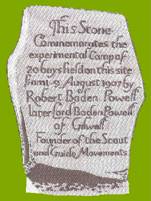
as its title. To test his ideas in practice he organised a test camp. This
camp, to which 21 boys participated (this in contrast to what was written on
the memorial stone) varying from poor to wealthy, was organised on Brownsea
Island from 1 to 9 august 1907. During this camp B.P. (as Baden Powell was
called) noticed that the cloths the boys were wearing, weren't suitable for
the game which he had in mind. Therefore special clothing had to be designed,
clothes which were strong and moreover banned the difference between the
existing classes. Initially Scouting for Boys was released in six
episodes, intended as a game plan for existing youth associations. Not the
youth associations, but youngsters themselves started to work with the
articles of B.P. It appeared that the youngsters spontaneously formed patrols
on their own, without any aid of adults. Baden Powell then decided to lead
the movement by himself and so this way Scouting started, an association which
developed into the largest youth association in the world, initially intended
only for boys of 12 till 17 years. |
How
Scouting came to Holland
Scoutmaster Bernhard Blythe of 16th
Oxfordgroup had taken the idea to make an excursion in the summer holiday to
the main land by bicycle, together with a number of boys. To plan his trip he
contacted "Jongelingen Matrozenkorps Jong Nederland” in Rotterdam and journalist Gos
de Voogt in Amsterdam. On Thursday August 4th he arrived in
Rotterdam with six boys, chosen as the best by skill tests. Here they were
welcomed by the members of the Matrozenkorps, who would grant hospitality to the
patrol. After several guided tours in Rotterdam and visits to The Hague and
Scheveningen the scouts left on Monday the 8th of Augusts to
Amsterdam, where they were welcomed by Gos de Voogt who had ensured their
lodging. After a stay of two days in Amsterdam the British Scouts continued
their hiking tour through the Netherlands and Belgium. Finaly they left the
European mainland on August 17th from Rotterdam to go back to
Oxford.
|
|
|
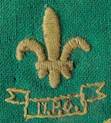
The visit of the English Scouts was the signal to start
scouts troops in several towns in Holland. As coordinating organisation the
“Nederlandsche Padvinders Organisatie“ (NPO) was established on the 5th
of January 1911 in Amsterdam and approximately at the same time in The Hague
the “Jonge Verkenners” was realised. In November 1911 the
“Nederlandsche Vereeniging of Boy Scouts“ arose, which later submerged later
in the NPO. On the 10th of March 1912 the “Nederlandsche
Padvindersbond“ (NPB) was founded, in which the “Jonge Verkenners“ were
taken. |
|
|

|
|
|
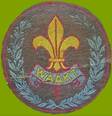
After a lot of discussions between NPO and NPB, which
went rather difficult, the ”Vereeniging De Nederlandsche
Padvinders” (NPV) was founded on December 11th 1915 as the
coordinating organisation for all Dutch Scouts. |
|
The girls also wanted to play the game of Scouting.
Soon Girlscouts, Padverkensters, Meisjesgezellen etc. appeared in several
towns. In 1912, there was an initiative to start a national organisation in
The Hague, the “Eerste Nederlandsche Meisjesgezellen Vereeniging“ (ENMGV),
but it didn't succeed. In some cities, such as Amsterdam and Amersfoort, the
girls were associated with the NPO. At the NPB girl groups weren't accepted.
When in 1915 the NPV came about the girls were again casted aside, because
the NPV also didn't accept girl troops. Some local associations, f.i. Amsterdam, Rotterdam and Leiden, got
together and set up the “Nederlandsch Meisjesgilde“ (NMG) (Dutch Girl Guild) on January 31,
1916. The ENMGV didn't join the NMG and remained independent for some time. In
1933, the name was changed in “Nederlandsch Padvindsters Gilde“ (NPG) (Dutch Girl Scout Guild). |
|
|
|
|
|
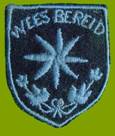
Following the Cub Scouts in United Kingdom, the first Cub
Scout groups started in 1919 in the Netherlands. The age of the cubs was
initially from 9 till 11 years, later this was brought back to 7 till 11
years. The game of the cubs, which is based on The
Junglebook written by Rudyard Kipling, takes place in the jungle. On the general Laeders conference of October 30th
1920 the Cubs were officially recognised. |

|
Shortly afterwards a third age group was formed, for
boys from 17 till 21years, the rover scouts. The denomination of the three
components together became a group, that of the cubs a pack, of the scouts a
troop and of the rover scouts a tribe. |
|
|

|
|
|
Also at the girl scouts
movement new age groups started; the brownies from 7 till 10 years and
pioneers from 17 till 21 years. The game of the brownies took place in the
world of Tommie and Betty and the wise brown owl,
written by Julia Horatia Ewing. |
|
|

|
|
|
In 1930 the catholic scout groups united themselves
to a catholic association, the “Katholieke Verkenners” (KV), which first was
a part of the NPV. In 1938 it became an independent association. |
In 1932 in Wassenaar the National
Camp was organised from 2 till 12 August.
The camp, on which several foreign groups participated,
was officially opened by HRH Prince Hendrik on the 3rd of August.
The sea scouts had situated their camp at the Kagerplassen. This camp was also
intended to be a test camp for a
possible jamboree.
On Thursday the 11th of August Baden Powell
visited the camp.
|
|
|
In that same year the “Pavindersvereniging
Nederland” (PVN) (Dutch Scout movement)
branched off from the NPV for organizational reasons. In order to be able to
participate in the Jamboree of 1937 the PNV joined the NPV again. |
|
The fifth
Worldjamboree,
in 1937, was organised in the Netherlands. More than 28000 scouts from
54 countries took part in this camp, which was located on the estate „Huis te
Vogelenzang“ at Vogelenzang (near Bloemendaal). The camp was opened by HM
Queen Wilhelmina in the presence of the founder of Scouting, Lord Robert Baden
Powell of Gilwell. This was the last Jamboree he visited. |
|
|

|
|
|
As the “Katholieke Verkenners” became an independent
association in 1938, something had to be organised, because only one organisation
in each country could become a member of the World Organisation of the
Scouting Movement (WOSM). Therefore the “Nationale Padvindersraad” (National
Scouts Council) was installed, to represent both associations (NPV and KV) at
the world organisation. |

The war period (1940 – 1945)
At first, Scouting could still play its game undisturbed,
only camping wasn't possible and outdoor activities were almost impossible.
Very soon it became clear that it was the intention to abolish all existing
youth associations and to form one national youth movement together with the
“Nationale Jeugd Storm“ (NJS) (the
national socialistic youth movement). However the “Nationale
Padvindersraad“ refused any cooperation.
|
On April 2nd 1941 Scouting was forbidden
by the German occupier, because in their opinion it was a hostile
organisation conducted from London. The headquarters were sealed and all administration etc.
was confiscated and destroyed. The troop homes were also sealed and were
later given to the NJS. All stuff that wasn't useful for them was burned, so
that much material had been lost. Nevertheless Scouting continued
underground. Suddenly several new clubs arose everywhere, such as walking
clubs, crafts clubs, etc. When scouts appeared directly after the end of the
war and restarted their activities it was clear that the Scouting Movement in
the Netherlands wasn’t affected by the war. |
|
|

|
|
|
Also the catholic girls wanted to play the game of
Scouting. On July 4th 1945 the “Nederlandse Gidsen Beweging” (NGB)
(Dutch Guides Movement) was formed
with brownies, guides and pioneers. Some years later the name was modified
into “Nederlandse Gidsen” (NG) (Dutch
Guides). The guides played the same game as the Girl Scouts of the NPG,
but the brownies had their own story, they played in Het bos van avontuur (The
woods of adventure). |
In 1946, the Driehoeksmeisjes (Trianglegirls) linked up with Scouting and in 1948 the scouting
groups of the Salvation Army followed. The girls joined the NPG and the boys
joined the NPV.
|
On the occasion of forty years of Scouting in
Holland the Cubs had a large Rimboejacht (Junglehunt)
in 1950, and a large Sea Scout camp was held in Terhorne. In Ommen the
national camp was held in which a large number of foreign scouts
participated. |
|
|

|
|
|
In 1957 the KV got a new age group, the rowans,
intended for boys from 14-15 till 17 years. Shortly afterwards the NG
followed with sherpas. In that same period the NPV experimented with senior
scouts and in the NPG the girl scouts were divided into juniors and seniors. |
The fiftieth anniversary in 1960, was celebrated in Ommen
with an international leaders gathering, “Indaba“, and in Amsterdam the event
“Youth and flowers“ took place bij boy scouts and girl scouts.
|
After the four associations decided to cooperate more
intensly into the “Federatie Scouting Nederland“ a merger followed shortly
afterwards. On January 6th 1973 the association “Scouting
Nederland“ was founded in which all four associations merged. The brownies of the NPG and the NG both had their own
theme, so after the merger a new theme was ceated; Bambilië. |
|
|

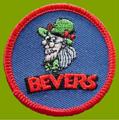
Following Canada a new age group for boys and girls from
5 - 7 years started in 1985: the bevers (beavers). They played in De wereld van Lange Doener (The
world of Lange Doener). As more and more of the Scoutinggroups started to
play with both boys and girls, a mixed unit started in 1991 for the age from 7
till 11 years: the Estas who play in Het land van
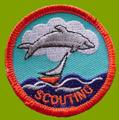
Esta (The Land of Esta). In 2001 a new unit for the same age
started for the waterscouts: Dolfijnen (dolphins), who play on Het
dolfijnen-eiland (The dolphin island).
|
|
|
|

|
|
|
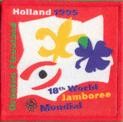
In 1995 the Netherlands organised a World Jamboree
for the second time, the 18th
World Jamboree in the Flevopolder near Biddinghuizen (municipality
Dronten). Next to the Flevohof approximately 29000 scouts from 169 countries
gathered there. In that same area the European Jamboree took place
in 1994. In this test camp not only Dutch scouts participated, but also a lot
of scouts from other European countries. During this camp things could still
be improved to make the World Jamboree a success. Following HM Queen Wilhelmina, who opened the first
jamboree in the Netherlands in 1937, HM Queen Beatrix opened this Jamboree on
August 2nd in the presence of the patron of Scouting Nederland,
HRH Prince Claus. This happened at a temperature of around 30 degrees
centigrade, a temperature which practically remained this high during the
entire Jamboree. In spite of that it was a very successful camp. |
In 1996 a reorganisation took place in order to reduce
the distance between the groups and the national level. Districts were combined
and transformed into regions and the counties were banned. Servicepoints came
to support the regions.
|
“Vrienden van Scouting”, an independent association
of former Scouts and Guides since 1973, was incorporated in the new unit
Plus-scouts in 2004, in which f.i. special interest rover scout units also
have been categorised. Because of this they also became a full member of
Scouting Nederland. |
|
|

|
|
|
The jubilee year 2010 was celebrated with
Bever-doe-dag in the Amersfoort Zoo, a massive happening for scouts from 7
years in Utrecht (for this occasion renamed as Scoutrecht) and Jubilee Jamboree
in Roermond. The uniform was modernised and is now called “Scoutfit”. Also
the game plan was reconsidered. The beavers will now play in the village Hotsjietonia instead of het house
Hotsjitonia. The cubs, brownies, estas and dolphins will all play together in
the jungle, with Mowgli and Shanti. From now on there will be
only one name used for every age group: 5-7 years beavers, 7 - 10 years cubs,
10 - 14 years scouts, 14 - 17 years explorers and 17 - 21 years rover scouts. |

The
museum is always interested in "old" Dutch scouting stuff.
Are you considering removing your old stuff, please contact us.